
The Harness Racing Triple Crowns: Your Complete Guide to the Trot and the Pace
If you follow thoroughbred racing, you know the Kentucky Derby, the Preakness, and the Belmont. But harness racing has its own Triple Crowns — two of them, in fact — and they are every bit as prestigious, every bit as competitive, and arguably even more technically demanding. This guide covers everything you need to know about both the Trotting Triple Crown and the Pacing Triple Crown: what they are, how they work, why they matter, and how to bet them at MyWinners.
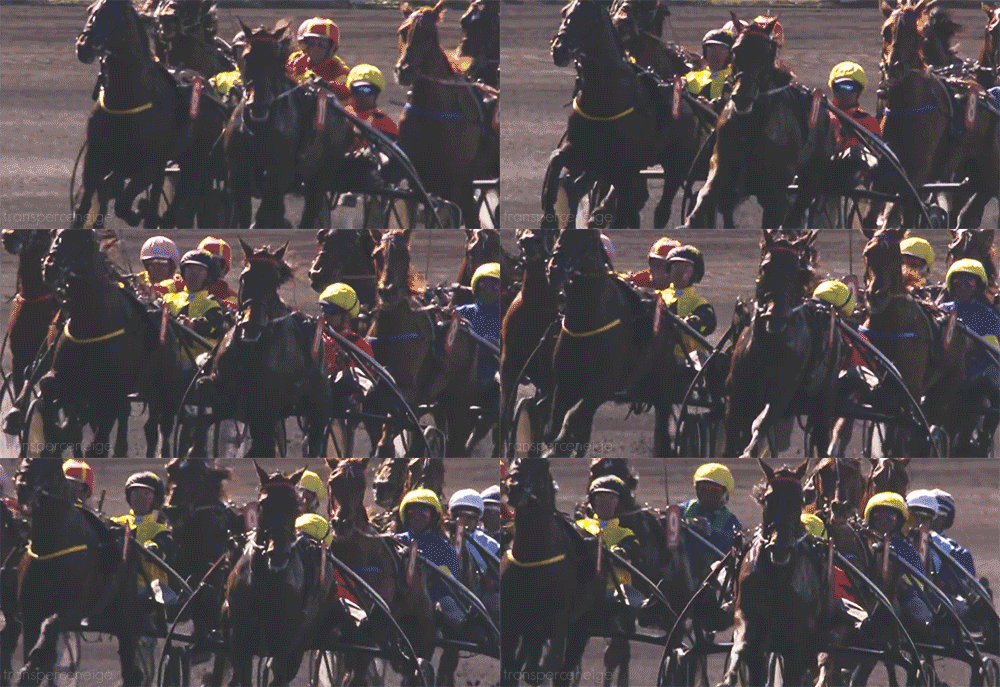
Before diving into the Triple Crowns, a quick primer for newcomers. Harness racing is a form of horse racing in which horses pull a lightweight two-wheeled cart called a sulky, with a driver seated behind. Unlike thoroughbred racing, where horses gallop freely, harness horses must maintain a specific gait throughout the race — and that distinction is central to how the two Triple Crowns are organised.
There are two recognised gaits in harness racing:
Trotting — the horse moves its legs in diagonal pairs (left front with right rear, right front with left rear simultaneously). It is a slower, more precise gait that demands exceptional training and athleticism.
Pacing — the horse moves its legs in lateral pairs (both left legs together, both right legs simultaneously). Pacers are generally faster and more numerous in North American harness racing.
If a horse breaks gait — switching from trot to canter, for example — the driver must steady the horse and regain the correct gait before continuing. Breaking gait can cost the race entirely. It is this strict discipline that makes harness racing unique and adds a tactical layer that bettors need to understand.
What Is a Triple Crown in Harness Racing?
A Triple Crown is achieved when a single horse wins all three designated Classic races in the same season. In harness racing, the Classics are restricted to three-year-old horses, the equivalent of the Classic generation in thoroughbred racing. Because trotting and pacing are separate disciplines, harness racing has two distinct Triple Crowns — one for trotters and one for pacers — with different races, different venues, and different histories.
Triple Crown winners are extraordinarily rare. The challenge is not just winning three elite races but doing so across a demanding mid-to-late season schedule, at different tracks, against the best horses in the country. A horse that peaks at the right moment, stays sound, and avoids the chaos of racing — interference, breaks, equipment failure — is a genuine champion.
The Trotting Triple Crown consists of three races run across a 10-week window from August to October. All three feature three-year-old trotters and carry some of the largest purses in the sport. The legs are run at three iconic North American harness venues.
Leg 1: The Hambletonian Stakes — August 1, Meadowlands Racetrack, New Jersey
The Hambletonian is the most famous trotting race in the world. Run at the Meadowlands in East Rutherford, New Jersey, it is the equivalent of the Kentucky Derby in terms of prestige and public profile. First held in 1926 and named after the legendary stallion Hambletonian 10 — the foundation sire of virtually all modern Standardbreds — the race has grown into a showcase event that draws trainers, owners, and fans from across the globe.
The Hambletonian is contested in heats. The top finishers from the preliminary heats advance to a final, with the overall winner determined by combined heat performance. This format adds strategic complexity: a horse may conserve energy in a heat, knowing a stronger effort in the final is what counts. The 2025 race carried a purse of $1.5 million, confirming its status as the pinnacle of trotting.
Date: 8 August 2026
Distance: One mile
Purse: $1.5 million (2025)
Leg 2: The Yonkers Trot — September 12, Yonkers Raceway, New York
The Yonkers Trot is held at Yonkers Raceway in New York, one of the most historic harness venues in the United States. First run in 1955, the race is known for its tight half-mile oval track — a very different challenge from the Meadowlands. The compact circuit demands a horse that is nimble, tractable, and able to maintain gait through tight turns under pressure. Many Hambletonian champions have come unstuck at Yonkers, which is precisely what makes it such an important test.
Yonkers is a night racing venue with a lively atmosphere, and the Trot regularly attracts full fields of the top three-year-old trotters in North America. Winning here — in a format that rewards tactical driving and track craft — is seen as a true measure of Classic-generation quality.
Date: 26 June 2026
Distance: One mile
Leg 3: The Kentucky Futurity — October 10, Red Mile, Lexington, Kentucky
The Kentucky Futurity, held at the Red Mile in Lexington, Kentucky, is the oldest of the three Trotting Triple Crown races, first run in 1893. It is also the final challenge and the most strategically complex. The Red Mile is a fast, one-mile dirt track in the heart of horse country, and it regularly produces some of the fastest times in trotting history. Horses targeting the Triple Crown arrive here needing a win, which creates tactical battles and elevated tension in the betting markets.
A horse that wins all three — Hambletonian, Yonkers Trot, and Kentucky Futurity — joins a small group of legends. Only a handful of horses have completed the Trotting Triple Crown in the modern era, the most recent being Glidemaster in 2006.
Date: TBC (Usually early October)
Distance: One mile
| Leg | Race | Date | Venue | Location |
|---|---|---|---|---|
| 1 | Hambletonian Stakes | August 8, 2026 | Meadowlands Racetrack | East Rutherford, NJ |
| 2 | MGM Yonkers Trot | June 26, 2026 | Yonkers Raceway | Yonkers, NY |
| 3 | Kentucky Futurity | TBC — early October 2026 | Red Mile | Lexington, KY |
The Pacing Triple Crown covers the same three-year-old generation but focuses on pacers — horses that race with the lateral gait. Because pacing is more prevalent in North American harness racing, the Pacing Triple Crown tends to attract larger fields and generates significant betting interest. The three legs run from early September through mid-October, though the order of prestige does not always match the chronological order of the races.
Leg 1: The Cane Pace — September 5, Yonkers Raceway, New York
The Cane Pace, named after racing patron William H. Cane, is the traditional opener of the Pacing Triple Crown and has been run at Yonkers Raceway since 1955. Like the Yonkers Trot, it takes place on the half-mile oval, where track position and driving strategy often matter as much as raw speed. The Cane Pace frequently sets the market for the rest of the Triple Crown season — a horse that wins impressively here immediately attracts attention from bettors and connections looking toward the subsequent legs.
Racing at Yonkers suits horses that can handle traffic and maintain their composure in tight conditions. It is rarely a race for front-runners alone; pace, positioning, and a good drive are essential.
Date: 8 August 2026
Distance: One mile
Leg 2: The Messenger Stakes — October 10, Meadowlands Racetrack, New Jersey
The Messenger Stakes is run at the Meadowlands on the same day as the Kentucky Futurity (Leg 3 of the Trotting Crown), making early October a must-watch weekend for harness fans. Named after Messenger, the English Thoroughbred whose bloodline is foundational to the Standardbred breed, the race is considered the Meadowlands' premier pacing event for three-year-olds.
The Meadowlands' larger, faster track favours speed horses that can sustain a strong pace over a mile. A horse targeting the Pacing Triple Crown that has already won the Cane Pace must back up that effort here, often just five weeks later.
Date: 26 June 2026
Distance: One mile
Leg 3: The Little Brown Jug — September 24, Delaware County Fair, Ohio
The Little Brown Jug is the most unusual and most beloved of all harness Triple Crown races. Held at the Delaware County Fair in Delaware, Ohio, it takes place on a half-mile county fair track — a setting that could not be more different from the polished Meadowlands or the storied Yonkers. The race is named after a pacer of the same name who raced in the 1870s, and it has been held annually since 1946.
Despite running before the Messenger Stakes in the calendar (September 24 vs October 10), the Little Brown Jug is classified as Leg 3 of the Pacing Triple Crown by convention. A horse completing the Crown must win all three, regardless of the order in which they were contested.
The Jug, as it is universally known, has a heat format similar to the Hambletonian. The county fair setting gives it a unique atmosphere — it is one of the few major harness races where the crowd is physically close to the action, and the Jug Day event typically draws tens of thousands of fans. Winning the Jug is a career-defining achievement.
Date: 24 September 2026
Venue: Delaware County Fair, Delaware, Ohio
Distance: One mile
Note: Although the Little Brown Jug is run before the Messenger Stakes in the calendar, it is designated Leg 3 of the Pacing Triple Crown.
| Leg | Race | Date | Venue | Location |
|---|---|---|---|---|
| 1 | Cane Pace | August 8, 2026 | Meadowlands Racetrack | East Rutherford, NJ |
| 2 | MGM Grand Messenger Stakes | June 26, 2026 | Yonkers Raceway | Yonkers, NY |
| 3 | Little Brown Jug | September 24, 2026 | Delaware County Fair | Delaware, OH |
Triple Crown winners in harness racing are genuinely rare events — rarer, in some respects, than in thoroughbred racing. The combination of a tight schedule, the demands of maintaining gait, the complexity of heat formats, and the depth of the Classic generation means that even the best horses often fall short of the clean sweep.
Trotting Triple Crown winners: Scott Frost (1955), Speedy Scot (1963), Ayres (1964), Nevele Pride (1968), Lindy’s Pride (1969), Super Bowl (1972), Windsong’s Legacy (2004), Glidemaster (2006), and Marion Marauder (2016). Just nine horses in over 70 years.
On the pacing side, the ten Crown winners are Adios Butler (1959), Bret Hanover (1965), Romeo Hanover (1966), Rum Customer (1968), Most Happy Fella (1970), Niatross (1980), Ralph Hanover (1983), Western Dreamer (1997), Blissful Hall (1999), and No Pan Intended (2003). There has been no pacing Triple Crown winner since 2003 — over two decades without a clean sweep.
The rarity is the point. When a horse arrives at the final leg of either Crown with a chance to complete the sweep, it becomes one of the most significant betting events on the harness racing calendar — and the odds often reflect the occasion.
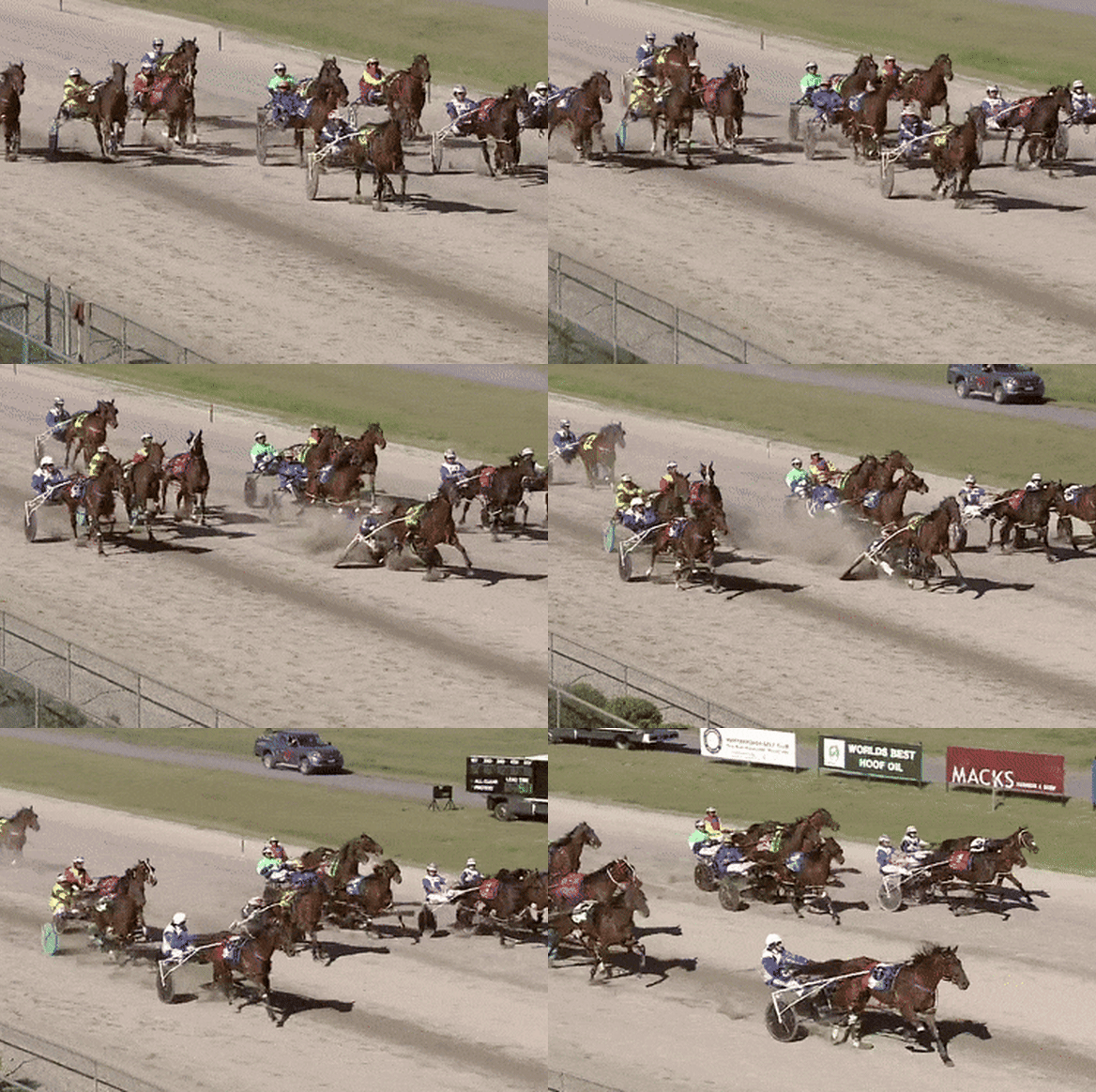
Both Triple Crowns offer serious betting opportunities across the season. Here is why they deserve a place in your race calendar.
Smaller, More Manageable Fields
Unlike many open-grade pacing or trotting races that feature full fields of 10 or more, the Triple Crown races often attract between six and nine horses. Smaller fields mean cleaner races with less traffic trouble — and for bettors, a more manageable puzzle. When you can meaningfully assess every runner, your edge is sharper.
Public Money on Wrong Horses
The Triple Crown races attract casual fans who follow a previous race winner regardless of form. If a horse won the Hambletonian impressively, it will often be overbet in the Yonkers Trot even if the track profile does not suit it. The half-mile oval at Yonkers is a significantly different challenge than the Meadowlands mile, and horses that dominate on big, fast tracks do not always translate. That public money creates value on overlooked runners.
The Heat Format Creates Multiple Betting Opportunities
The Hambletonian and the Little Brown Jug both use a heat format, meaning you bet individual heats as well as the overall event. A horse that has shown strong form in the prelim but drawn a tough post position in the final is a prime candidate for a value price. Heat-by-heat wagering requires attention and willingness to reassess, but the rewards are there.
Strong Exotic Bet Structures
The Classic Triple Crown races typically offer exacta, trifecta, superfecta, and multi-race exotics. In a field of six or seven runners, a well-constructed trifecta using form analysis rather than public opinion can deliver strong returns. The key races to target for exotic value are the Yonkers Trot (where the track catches out overrated favourites) and the Little Brown Jug (where the county fair format and heat racing can produce unexpected results).
Low-Volume Media Coverage Means Less Efficient Markets
Thoroughbred racing markets are saturated with analysis. Harness racing — particularly the trotting events — receives far less mainstream media attention, which means the pari-mutuel pools are shaped more by local regulars and less by sharp analytical money. For a prepared bettor who has done their homework, that inefficiency is an opportunity.
MyWinners offers pari-mutuel betting on all major harness racing events, including the six Triple Crown legs. Betting is available online, on the MyWinners app, and at participating venues in Connecticut.
Key Bet Types for Harness Racing
| Bet Type | What You Need | Best For |
|---|---|---|
| Win | Your horse to finish 1st | Beginners; strong single opinions |
| Place | Your horse to finish 1st or 2nd | Shorter-priced horses; safety plays |
| Show | Your horse to finish 1st, 2nd, or 3rd | Combination tickets; low-risk anchors |
| Exacta | 1st and 2nd in correct order | Small fields of 6–8 runners |
| Trifecta | 1st, 2nd, and 3rd in correct order | Classic races; key/box combinations |
| Superfecta | 1st, 2nd, 3rd, and 4th in correct order | Big returns from small stakes |
| Daily Double | Winners of two consecutive races | Strong views on back-to-back races |
| Pick 3 | Winners of three consecutive races | Building multi-race sequences around Triple Crown cards |
| Pick 4 | Winners of four consecutive races | Higher reward; anchor on a short-priced banker |
| Pick 5 | Winners of five consecutive races | Accessible minimum stakes; lucrative pools on major race days |
| Pick 6 | Winners of six consecutive races | Biggest multi-race bet; carryovers inflate the pool further |
Harness Racing Betting Tips
Check gait discipline records. A horse with a history of breaking gait under pressure is a risk in big-field, high-pace races.
Understand post position impact. At half-mile ovals like Yonkers, drawing post 1 or 2 is a significant advantage. Post 7 or 8 can be very difficult.
Know the track. The Meadowlands suits speed horses. Yonkers suits tactical, composed horses. The Red Mile is fast and favours horses with strong late fractions. Delaware County Fair can be unpredictable.
Watch the driver changes. A leading driver being booked for a previously unremarkable horse is a significant signal. Driver quality matters more in harness than jockey changes do in flat racing.
Study the heats. In heat-format races, a horse that won a heat without being fully extended is likely carrying more ability than the bare result suggests.
Both Triple Crowns run from summer into autumn, giving you a sequence of six major harness races across ten weeks. Whether you are following a potential Crown winner through the series, targeting value spots where the public is wrong, or simply building your harness betting knowledge for the long term, these races are worth your attention.
Bet online at app.mywinners.com, on the MyWinners: Racing & Sports app on iOS or Android, or go here to find your nearest MyWinners or Winners venue in CT.
