
Horse Racing Equipment Abbreviations Explained: Blinkers, Visors, Cheekpieces and More
Pull up any racecard, US or UK, and you'll see a run of lowercase letters sitting next to a horse's name or weight. b. v. p. t. h. They look like typos until you know what they mean, and once you do, they're some of the most useful information on the page. Equipment changes tell you a trainer is trying to fix or unlock something in a horse, and first-time gear is one of the most reliable signals in form study. We're breaking down every letter, what it actually does to the horse, and why it matters when you're deciding where to put your money.
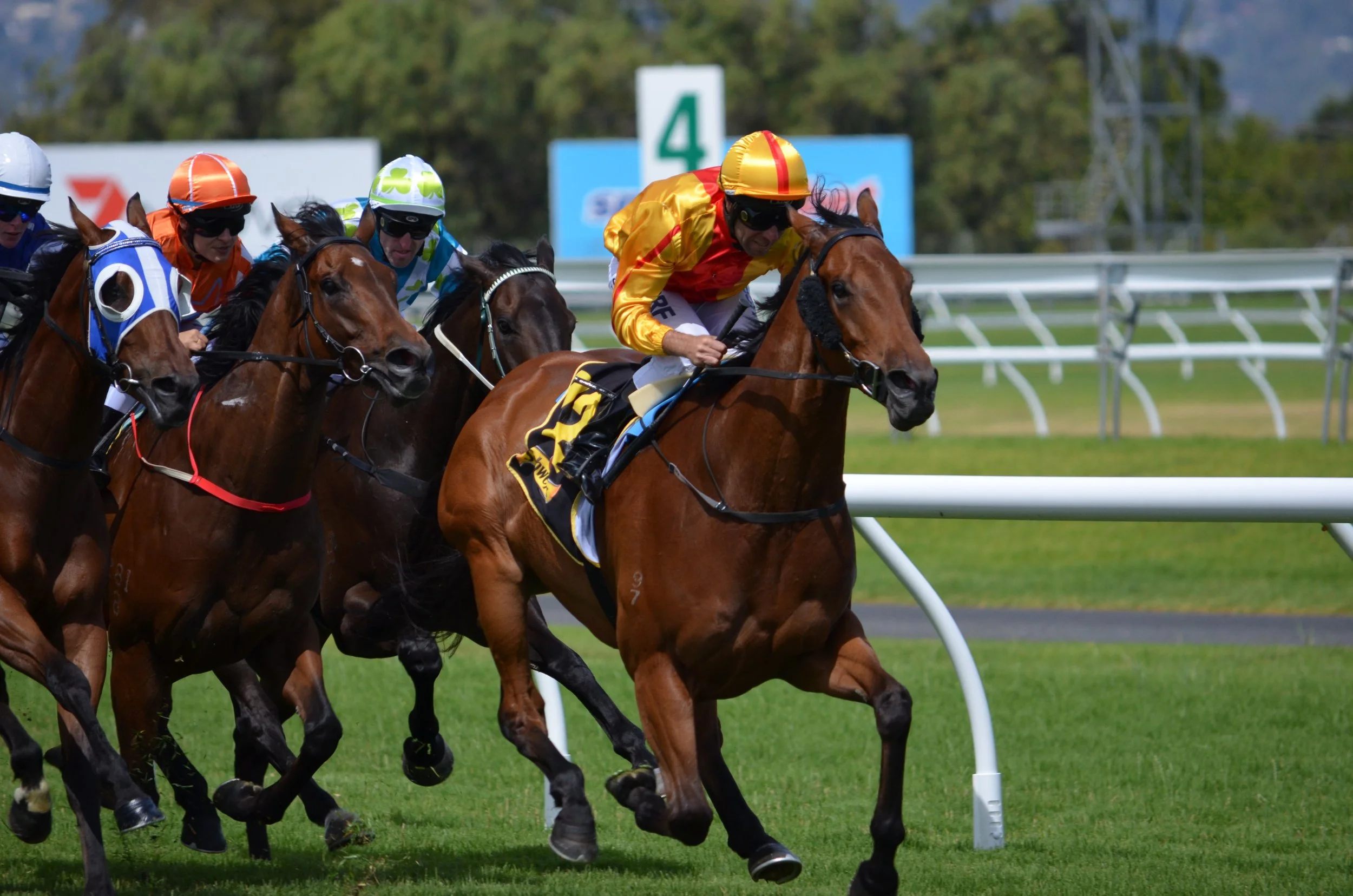
What Do Horse Racing Equipment Abbreviations Mean?
Racecards abbreviate headgear and other race-day equipment into single lowercase letters, usually placed next to the horse's weight or name. UK and Irish cards are the most consistent about this convention, since the British Horseracing Authority requires equipment changes to be declared and printed. US cards tend to list changes in the program notes or past performance lines rather than a single letter, but the same handful of items come up again and again.
The key thing to watch for is a number attached to the letter. b1 means blinkers for the first time. v2 means a visor for the second time. First-time equipment is the signal serious form students pay closest attention to, because it's the trainer telling you, in public, that something is changing about how this horse is being asked to run.
Blinkers (b): The Most Common Equipment Change
Blinkers are plastic or leather cups fitted to a hood over the horse's eyes, cutting off rear and side vision so the horse can only really see what's directly ahead. They're the most commonly applied piece of equipment in the sport, used on horses that idle, hang, or lose focus when something happens beside or behind them.
Trainers reach for blinkers to sharpen a horse's early speed, since a horse that isn't looking around is more likely to break sharply and commit to the pace. They're also used on horses that drift left or right in the stretch, since narrowing the field of vision tends to straighten a horse out. The size of the cup determines how much vision is cut off, and trainers will sometimes go from a small cup to a full cup, or vice versa, without dropping the blinkers entirely.
Visor (v): A Softer Alternative to Blinkers
A visor works the same way as blinkers but with a small slit or hole cut into the side of each cup, giving the horse a bit of peripheral vision back. Trainers use a visor when a horse needs help focusing but doesn't need the full restriction of blinkers, or as a step down when full blinkers made a horse overly aggressive or hard to settle.
Cheekpieces (p): The In-Between Option
Cheekpieces, sometimes called French blinkers, are strips of sheepskin or felt attached to the cheek straps of the bridle. They partially restrict a horse's rearward vision without the hard cutoff of blinkers or a visor. Many trainers use cheekpieces as the first thing they try before moving to something stronger, since they're the mildest of the three vision-limiting options and can be added or dropped from run to run with little disruption to the horse.
Hood (h) and Ear Plugs: Cutting Out the Noise
A hood covers a horse's ears and poll and doesn't affect vision at all. It's a noise-management tool rather than a focus tool, used on horses that get worked up by crowd noise, the starting gate, or the general chaos of a big field. Some horses only wear the hood in the paddock and post parade and race without it; others keep it on through the race itself.
Ear plugs do a similar job in the US. Zenyatta famously raced in white cotton ear plugs, and American Pharoah wore a sheepskin pair through his Triple Crown run that blended in well enough that plenty of bettors never noticed. Both the hood and ear plugs exist to take the edge off a horse that's more talented than it is composed.
Tongue Tie (t): Not About Vision at All
A tongue tie is a strap, usually nylon or an elastic band, that holds the horse's tongue down and forward, stopping it from sliding back over the bit and partially blocking the airway. It's a breathing aid rather than a focus aid, used on horses that make a noise or lose action when the tongue interferes with the bit or throat during a race. Tongue tie use has climbed steadily across UK and Irish racing in recent years as trainers look for a straightforward fix for horses with mild respiratory issues.
Shadow Roll: US Racing's Equipment Without a Letter
The shadow roll is the one major piece of equipment that doesn't get its own racecard letter in the UK system, but it's everywhere in US racing notes. It's a padded roll of sheepskin or synthetic fleece fitted across the noseband, sitting above the nostrils. Its job is purely to block the horse's view of the ground directly in front of it, so it stops jumping shadows, ground shadows from the grandstand, or changes in the track surface. It also tends to encourage a lower head carriage, which several trainers believe helps a horse run in a straighter line.
Shadow rolls come in different thicknesses. A thin roll barely changes what the horse sees. A full, thick roll blocks a meaningful amount of the ground-level view. Watching whether a trainer goes from thin to thick, or removes the roll entirely, is a small but real piece of information for anyone studying a horse's recent form.
Racecard Equipment Abbreviations at a Glance
Here are the letters you'll run into most often on a UK or Irish racecard, what they stand for, and what the equipment actually does.
| Letter | Equipment | What It Does |
|---|---|---|
| b | Blinkers | Solid cups that block rear and side vision to sharpen focus and improve early speed |
| v | Visor | Modified blinkers with a small slit, allowing limited peripheral vision back |
| p | Cheekpieces | Sheepskin strips that partially restrict rearward vision, milder than blinkers |
| h | Hood | Covers the ears and poll to reduce noise, does not affect vision |
| t | Tongue-tie | Strap that holds the tongue down to keep the airway clear during a race |
| e | Eye hood | Covers part of the eye area, used for horses needing a milder visual aid |
| Ht | Hood and tongue-tie | Combination of a noise-reducing hood and a breathing aid tongue-tie |
| tb | Tongue-tie and blinkers | Combination equipment change, both applied for the same run |
| tp | Tongue-tie and cheekpieces | Combination equipment change, both applied for the same run |
Why First-Time Equipment Changes Matter for Bettors
None of this equipment guarantees a winning run. Plenty of horses wear blinkers or a shadow roll their whole careers with no measurable change in form. What matters to bettors is the pattern: a horse switching to first-time blinkers after a string of races where it looked like it lost interest in the stretch, or a horse getting a tongue tie for the first time right after a race where it made an audible noise, is a trainer publicly signaling a specific fix. Reading equipment changes alongside the form line, not in isolation, is what turns a lowercase letter on a racecard into a real edge.
Betting on Equipment Changes at MyWinners
Every racecard on the MyWinners app shows equipment changes right alongside the odds, so you can factor in a first-time visor or a new shadow roll before you commit to a bet.
Bet online at app.mywinners.com, on the MyWinners: Racing & Sports app on iOS or Android, or go here to find your nearest MyWinners or Winners venue in CT.
