The Preakness Stakes is the shortest of the Triple Crown races — nine and a half furlongs run in a matter of under two minutes — and its compact format means every horse breaks from a standing start, with the first turn arriving relatively quickly. That makes the gate assignment more meaningful than casual fans might expect. This piece works through the historical record gate by gate, identifies the pace profiles that tend to suit each position, and sets up the lens through which to read the 2026 draw, which fires on Monday, May 11.
Table of Contents
Why Post Position Matters at Pimlico — and What Changes at Laurel Park in 2026
The pattern in the data is not subtle. Posts 1 through 7 account for the overwhelming majority of Preakness Stakes winners, even adjusting for the fact that they appear in every field. Nine of the eleven most recent Preakness champions before 2026 broke from posts 1 through 6. The sweet spot is the middle band of gates 4 through 7, where each individual post has produced at least 14 all-time winners and no gate has a win percentage below 12%. The inside rail posts (1 through 3) are productive in absolute terms but more volatile — three wins since 2015 from post 1, but nothing from posts 2 or 3 in over a decade. The outside — gate 8 onwards — is where probability works against you. Post 9’s 5.1% win rate is less than half the rate of post 8. Posts 10 and 11 have not produced a winner since 2001. Post 14 has never won in the history of the race.
The table below captures the full picture at a glance. Gates highlighted in the productive middle zone have win percentages well above the mathematical expectation for a field of eight to ten runners. Gates in the outer band consistently underperform.
| Post | Wins | Starts | Win % | Most Recent Winner | Pace Profile Advantage |
|---|---|---|---|---|---|
| 1 | 12 | 117 | 10.3% | National Treasure (2023) | Speed / Stalker |
| 2 | 12 | 117 | 10.3% | Journalism (2025) | Speed / Stalker |
| 3 | 12 | 117 | 10.3% | California Chrome (2014) | Speed / Stalker |
| 4 | 14 | 117 | 12.0% | Authentic (2020) | All styles |
| 5 | 14 | 115 | 12.2% | Seize the Grey (2024) | All styles |
| 6 | 17 | 114 | 14.9% | Rombauer (2021) | All styles |
| 7 | 14 | 105 | 13.3% | Justify (2018) | Stalker / Closer |
| 8 | 10 | 93 | 10.8% | Bernardini (2006) | Closer |
| 9 | 4 | 78 | 5.1% | I’ll Have Another (2012) | Closer only |
| 10 | 2 | 59 | 3.4% | Real Quiet (1998) | Closer only |
| 11 | 2 | 41 | 4.9% | Point Given (2001) | Closer only |
| 12 | 3 | 27 | 11.1% | Afleet Alex (2005) | Closer only |
| 13 | 1 | 16 | 6.3% | Rachel Alexandra (2009) | Exceptional horses only |
| 14 | 0 | 13 | 0.0% | — | No winners recorded |
What Changes at Laurel Park
At Pimlico, the starting gate for the Preakness sits just over three-sixteenths of a mile from the finish line. The track itself is a narrow mile oval — only 70 feet wide — and the final turn measures 1,327 feet, which is long but tight. The short run-up to the first bend historically put a premium on tactical speed: horses that can establish position quickly without burning reserves. Rail-skimming inside posts let speed horses settle economically; wide posts asked horses to either burn extra ground to get forward or drift back into traffic.
The 2026 Preakness runs at Laurel Park for the first time in the race’s 151-year history. Pimlico is in the middle of a $400 million renovation, and the Maryland Jockey Club has shifted the race south to Laurel, approximately 30 miles from Baltimore. Laurel’s main track is a one-and-one-eighth-mile oval — an eighth of a mile bigger than Pimlico — with a width of 95 feet, 25 feet wider than its usual home. The final stretch from the last turn to the finish line is approximately 1,419 feet, comfortably longer than Pimlico’s. The net effect is a bigger, more open racetrack that gives horses more room to manoeuvre and a longer straight in which closers can mount their challenge. This is not a trivial difference, and it means the historical Pimlico data should be interpreted with a degree of caution when mapping it onto 2026.
The Full Historical Record by Gate
The starting gate was introduced to the Preakness in 1909. Since then, the race has been run at Pimlico in almost every edition, giving us more than a century of gate-by-gate results. The figures below cover all runnings from 1909 through 2025. Because the field size has varied considerably — some early runnings featured as few as two or three horses, and posts above 8 appear far less frequently than the inside positions — win percentage is a more reliable measure than raw win totals.
Gate 1
Post 1 has produced 12 winners from 117 starts, a win rate of around 10.3%. Three of those wins have come since 2015 alone — American Pharoah (2015), War of Will (2019), and National Treasure (2023) — suggesting a recent resurgence for the rail. Before American Pharoah, the last post-1 winner was Tabasco Cat in 1994. From a pace perspective, the rail suits front-runners and horses with enough early speed to take or track the lead without being pressured wide. The risk is getting caught on a compromised inside path if the surface plays dead on the rail.
Gate 2
Post 2 matches post 1 with 12 wins from 117 starts. The last winner from this gate was Cloud Computing in 2017, who defeated Classic Empire in what remains one of the more surprising results of the modern era. Post 2 offers similar advantages to post 1 in terms of distance saved but with slightly less risk of rail trouble. Its record in recent cycles has been modest, but Journalism — the 2025 Preakness winner — broke from post 2, adding to the gate’s modern resume.
Gate 3
Gate 3 has 12 winners from 117 starts. Its most recent winner was California Chrome in 2014. The gate sits in the inside cluster that broadly produces the majority of Preakness winners. Horses from post 3 are close enough to the rail to save ground but have more room to manoeuvre at the break than the pure inside posts.
Gates 4, 5 and 7 — The Productive Middle Band
Gates 4, 5 and 7 have each produced 14 winners in the all-time record, giving them a win rate in the 12–13% range. Post 5 is particularly strong in recent memory: Seize the Grey won from there in 2024, Early Voting in 2022, and in total post 5 has produced four winners since 2000 — more than any other gate over that period. Post 7 delivered Justify in 2018. This middle band from posts 4 through 7 is where the data is most consistently positive, and it is no coincidence that it offers horses neither the traffic risks of the rail nor the ground-losing exposure of the extreme outside.
Gate 6 — The All-Time Leader
No gate has produced more Preakness winners than post 6, which has 17 victories — a win percentage of approximately 14.9% across 114 starts. It is the single most successful post in the race’s history under starting-gate conditions. However, context matters: post 6’s most recent winner was Rombauer in 2021, and the gate had only one winner in the eight editions before that (Oxbow in 2013). The long-run data is compelling, but punters should not treat post 6 as an automatic advantage — the quality of the horse ultimately overrides gate assignment.
Gate 8
Post 8 has returned 10 winners from 93 starts, a rate of around 10.8%. It is arguably the last of the consistently productive gates. Bernardini (2006) and War Emblem (2002) are among the notable post-8 winners. Beyond gate 8, win rates fall sharply.
Gates 9 Through 13 — Diminishing Returns
Post 9 has managed only four wins from 78 starts — a 5.1% rate, roughly half of what you would expect relative to field size. Posts 10 and 11 have two wins apiece, from 59 and 41 starts respectively, and neither has produced a winner since 2001. Post 12 has three wins from 27 starts, the most recent in 2005. Post 13 has produced a single winner — Rachel Alexandra in 2009, and she was exceptional enough to render any gate irrelevant. From posts 9 outward, the data strongly suggests horses are fighting an uphill battle unless field size is unusually large and pace shapes accordingly.
Gate 14 and Beyond — No Winners
Post 14 has never produced a Preakness winner, and posts 15 through 18 have combined for zero wins from 13 starts. The Preakness is capped at a 14-horse field, and a full draw of 14 has not been seen since 2011, meaning these outer posts rarely appear. When they do, the data is unambiguous: no horse has won from post 14 or beyond.
The Full Historical Record by Gate
Post position and running style are not independent variables. The gate assignment helps determine whether a horse’s preferred running style is reinforced or compromised.
Horses breaking from the inside three posts face the shortest run to the rail. Front-runners from gates 1 through 3 can sit directly behind the pace or claim the lead with minimal effort. Stalkers in these posts can park just off the early fractions without burning energy to get position. The main risk for inside gates is a compromised start — a slow break from the rail with horses cutting across means losing valuable ground immediately.
Gates 4 through 7 represent the most tactically flexible zone. Horses from here can push forward to join or track the pace without having to rush, or they can settle mid-pack and let the race develop. The historical win rate from this zone reflects that flexibility. A closer drawn here has a clear path to the outside of any early pace duel without burning extra ground the way a post-8 closer might.
From gates 8 onwards, front-runners are increasingly disadvantaged because they have to use early speed to cross to the front, burning reserves before the first turn. Closers from wide posts face the opposite problem: they lose ground going three wide, and the Pimlico layout has historically not offered a long enough stretch to make up the deficit. As noted, the wider and longer Laurel Park circuit could theoretically reduce this penalty to some degree in 2026.
Pace Profiles by Gate Zone
The pattern in the data is not subtle. Posts 1 through 7 account for the overwhelming majority of Preakness winners, even adjusting for the fact that they appear in every field. Nine of the eleven most recent Preakness champions before 2026 broke from posts 1 through 6. The sweet spot is the middle band of gates 4 through 7, where each individual post has produced at least 14 all-time winners and no gate has a win percentage below 12%. The inside rail posts (1 through 3) are productive in absolute terms but more volatile. The outside — gate 8 onwards — is where probability works against you.
The Laurel Park Variable: What It Means for the 2026 Draw
The post position draw for the 151st Preakness Stakes takes place on Monday, May 11. The field is expected to approach 14 starters, which would be the largest Preakness field in over a decade. Kentucky Derby winner Golden Tempo has been scratched from the field, leaving an open race without a Triple Crown narrative — but a competitive one.
The key 2026 variable is Laurel Park. The track is wider, the final stretch is longer, and the oval is bigger than Pimlico’s. From a handicapping standpoint, this should slightly benefit horses that want to come from off the pace, because the longer run home gives them more ground over which to build momentum. Equally, it reduces the ‘short turn, get position fast’ dynamic that makes inside gates so critical at Pimlico. The ideal gate zone may shift very slightly outward — posts 5 through 8 potentially carrying more weight than they would at Pimlico, and the pure rail advantage of posts 1 through 3 being marginally diluted.
The pace setup entering race week also matters. If the field contains multiple front-runners and pace is expected to be contested, wide closers become more viable regardless of post. If the race sets up as a walk, the inside tactical horses remain in control.
Bet the 2026 Preakness Stakes at MyWinners
MyWinners offers pari-mutuel wagering on all major American thoroughbred races, including the Preakness Stakes. Bet win, place, show, exacta, trifecta, superfecta and pick wagers on the 151st running of the race at Laurel Park on Saturday, May 16. Connecticut-address customers can bet online at MyWinners. Any customer aged 18 or over can wager in person at our nine Winners and MyWinners locations across Connecticut.
Bet online at app.mywinners.com, on the MyWinners: Racing & Sports app on iOS or Android, or go here to find your nearest MyWinners or Winners venue in CT.
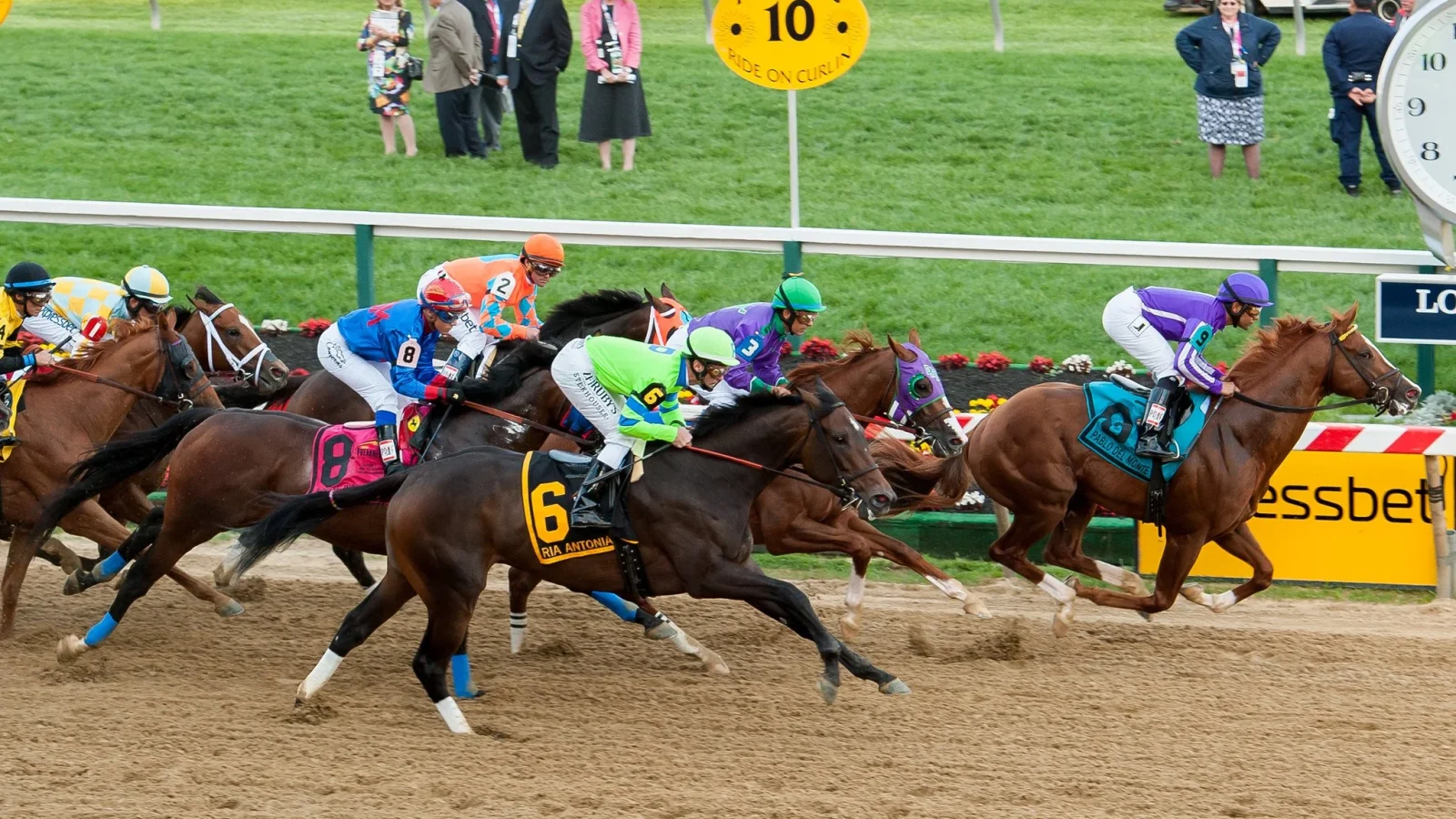
Image © Maryland GovPics / Jay Baker, CC BY 2.0