
Seabiscuit: The Full Story of Horse Racing's Greatest Underdog
Who Was Seabiscuit
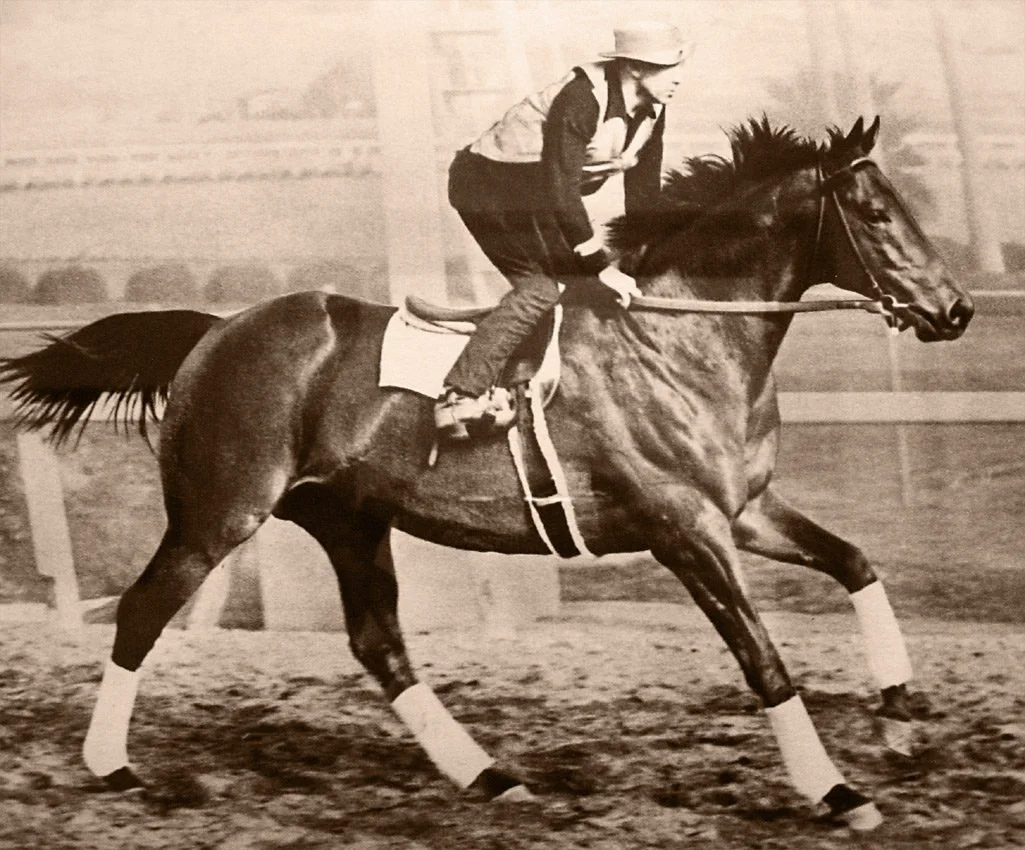
Seabiscuit was a bay Thoroughbred foaled on May 23, 1933, a grandson of Man o' War through his sire Hard Tack, out of the mare Swing On. He stood just 15.2 hands, carried a knobby, awkward gait, and spent his early years looking nothing like a champion. By the time he retired in 1940, he had made 89 starts, won 33 of them, placed second in 15 and third in 13, and banked $437,730 in earnings, a North American record at the time.
His story became one of the most told in American sports because it was true before it was ever cinematic. A small, sleepy colt with crooked front legs went from a claiming yard joke to the horse that outdrew presidential radio addresses in 1938. That combination of running style, timing, and cast of characters is why the seabiscuit horse story still gets more search traffic than almost any other name from the sport's golden era.
The Early Career That Nearly Buried Him
Seabiscuit began his career with Wheatley Stable under trainer James "Sunny Jim" Fitzsimmons, the same barn that would later produce Bold Ruler. It did not go well. He lost his first 17 starts and picked up a reputation as lazy and difficult, the kind of horse a barn quietly stops trying with. In his first 40 outings he won only about a quarter of the time, hardly the resume of a future Hall of Famer.
Everything changed when automobile entrepreneur Charles Howard bought him in 1936 and handed him to trainer Tom Smith, a taciturn former mustang breaker with an unconventional eye for horses other trainers had given up on. Smith paired Seabiscuit with jockey Red Pollard, a journeyman rider who had quietly gone blind in one eye from a training accident and hidden it from everyone in the sport. The horse nobody wanted and the rider nobody trusted turned into the defining partnership of 1930s racing.
1937 and 1938: The Rise to Horse of the Year
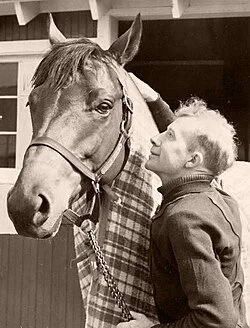
Under Smith and Pollard, Seabiscuit won 11 of 15 starts in 1937, including the Massachusetts Handicap, Brooklyn Handicap, and San Juan Capistrano Handicap, the last of those by seven lengths in track record time. He was denied Horse of the Year that season, finishing second to War Admiral despite outearning him, a result that only fed the growing public appetite for the two horses to actually meet.
In 1938, with Pollard sidelined by injury and George Woolf in the saddle, Seabiscuit swept through the Agua Caliente Handicap, a track record Bay Meadows Handicap, a match race win over Ligaroti at Del Mar, the Havre de Grace Handicap, and the Hollywood Gold Cup. Crowds at Bay Meadows had already started chanting for a showdown with War Admiral before the year's biggest race had even been scheduled.
The Race of the Century: Seabiscuit vs War Admiral
War Admiral, a son of Man o' War himself, arrived at the November 1, 1938 Pimlico Special unbeaten in nine starts and fresh off a 1937 Triple Crown sweep. He went off at 1/4 in the mutuel betting. Seabiscuit, sent off at a remarkable 2/1 given his profile, broke sharply from the walk-up start on Woolf's instruction, a total reversal of his usual stalking style built specifically to deny War Admiral his customary early speed.
Seabiscuit led throughout the 1 3/16 mile contest, held off a sustained War Admiral rally through the stretch, and crossed the wire four lengths clear in a track record 1:56.6, a time War Admiral never bettered even in defeat. An estimated 40,000 fans packed Pimlico and more than 40 million tuned in on the radio, a bigger audience than that year's World Series.
| Category | Seabiscuit | War Admiral |
|---|---|---|
| Sire | Hard Tack (by Man o' War) | Man o' War |
| Career record entering Nov 1, 1938 | Multiple seasons, 1937 top earner | Unbeaten in 9 starts |
| Major honor before the match race | 1937 leading money winner | 1937 Triple Crown, 1937 Horse of the Year |
| Pimlico Special mutuel odds | 2/1 | 1/4 |
| Pimlico Special result (Nov 1, 1938) | Won by 4 lengths, 1:56.6 | Finished second |
| Final career earnings | $437,730 (89 starts) | $273,240 (26 starts) |
Injury, Comeback, and a Final Track Record
Seabiscuit suffered a ruptured suspensory ligament in February 1939 that threatened to end his career for good. Pollard, recovering from his own shattered leg after a separate accident, rehabilitated alongside the horse at Ridgewood Ranch. Both returned together in 1940, and Seabiscuit won the San Antonio Handicap in track record time before closing out his career in the Santa Anita Handicap, the one race that had eluded him three years earlier when he lost to Rosemont by a nose.
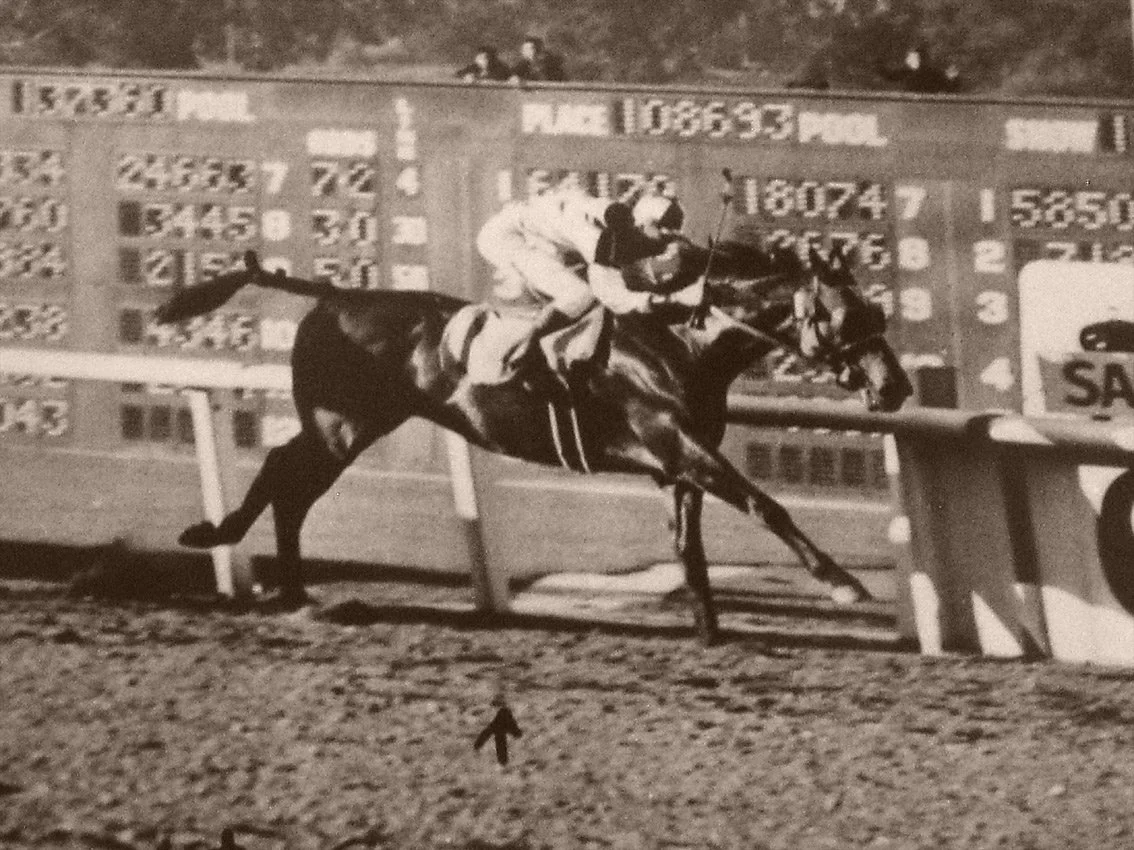
In front of 78,000 fans, Seabiscuit overcame traffic trouble in the stretch to beat stablemate Kayak II by a length and a half, covering the 1 1/4 miles in 2:01 1/5, his final track record. There was nothing left to prove, and Howard retired him on the spot.
Career Record and Legacy

Seabiscuit's final line reads 89 starts, 33 wins, 15 seconds, 13 thirds, and $437,730 in earnings, a record that stood until 1942. He was the U.S. Champion Handicap Male in both 1937 and 1938 and American Horse of the Year in 1938. He was inducted into the National Museum of Racing and Hall of Fame in 1958 and still ranks among the top names on the National Turf Writers' all time list.
| Category | Figure |
|---|---|
| Career starts | 89 |
| Wins | 33 |
| Seconds | 15 |
| Thirds | 13 |
| Career earnings | $437,730 |
| Champion Handicap Male | 1937, 1938 |
| Horse of the Year | 1938 |
| Hall of Fame induction | 1958 |
Retired to Howard's Ridgewood Ranch in Willits, California, Seabiscuit sired 108 foals, though none matched his own achievements on the track. He died on May 17, 1947, at the age of 13. More than eight decades later, the seabiscuit horse remains the sport's clearest proof that pedigree and looks do not decide who wins the biggest races. Preparation, the right team, and a horse willing to fight for every length still do.
Bet on Today's Racing
Seabiscuit's era ran on radio calls and mutuel windows. Today you can follow the same sport, and the horses chasing their own version of his story, right here at MyWinners.
Bet online at app.mywinners.com, on the MyWinners: Racing & Sports app on iOS or Android, or go here to find your nearest MyWinners or Winners venue in CT.
Frequently Asked Question
Seabiscuit won 33 of his 89 career starts, finishing second 15 times and third 13 times, for career earnings of $437,730, a North American record when he retired in 1940.
Seabiscuit lost his first 17 starts under trainer Sunny Jim Fitzsimmons at Wheatley Stable and picked up a reputation as lazy and difficult before Charles Howard bought him in 1936 and handed him to trainer Tom Smith.
On November 1, 1938, Seabiscuit defeated Triple Crown winner War Admiral by four lengths in the Pimlico Special, breaking from a walk-up start and leading throughout the 1 3/16 mile race in a track record 1:56.6.
Seabiscuit was owned by Charles Howard and trained by Tom Smith from 1936 onward, with Red Pollard as his primary jockey and George Woolf riding him during Pollard's injury layoffs, including the Pimlico Special.
Seabiscuit retired after winning the 1940 Santa Anita Handicap, beating stablemate Kayak II by a length and a half in a final track record time of 2:01 1/5, then went to stud at Ridgewood Ranch until his death in 1947.
