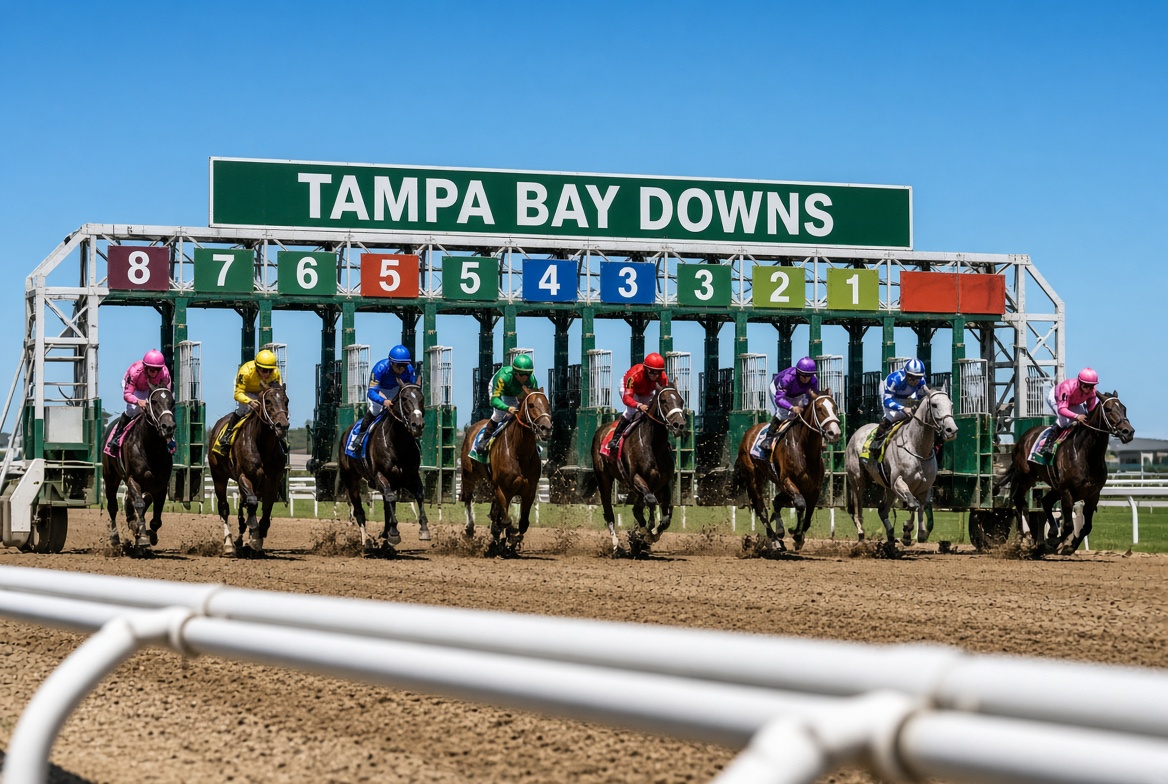
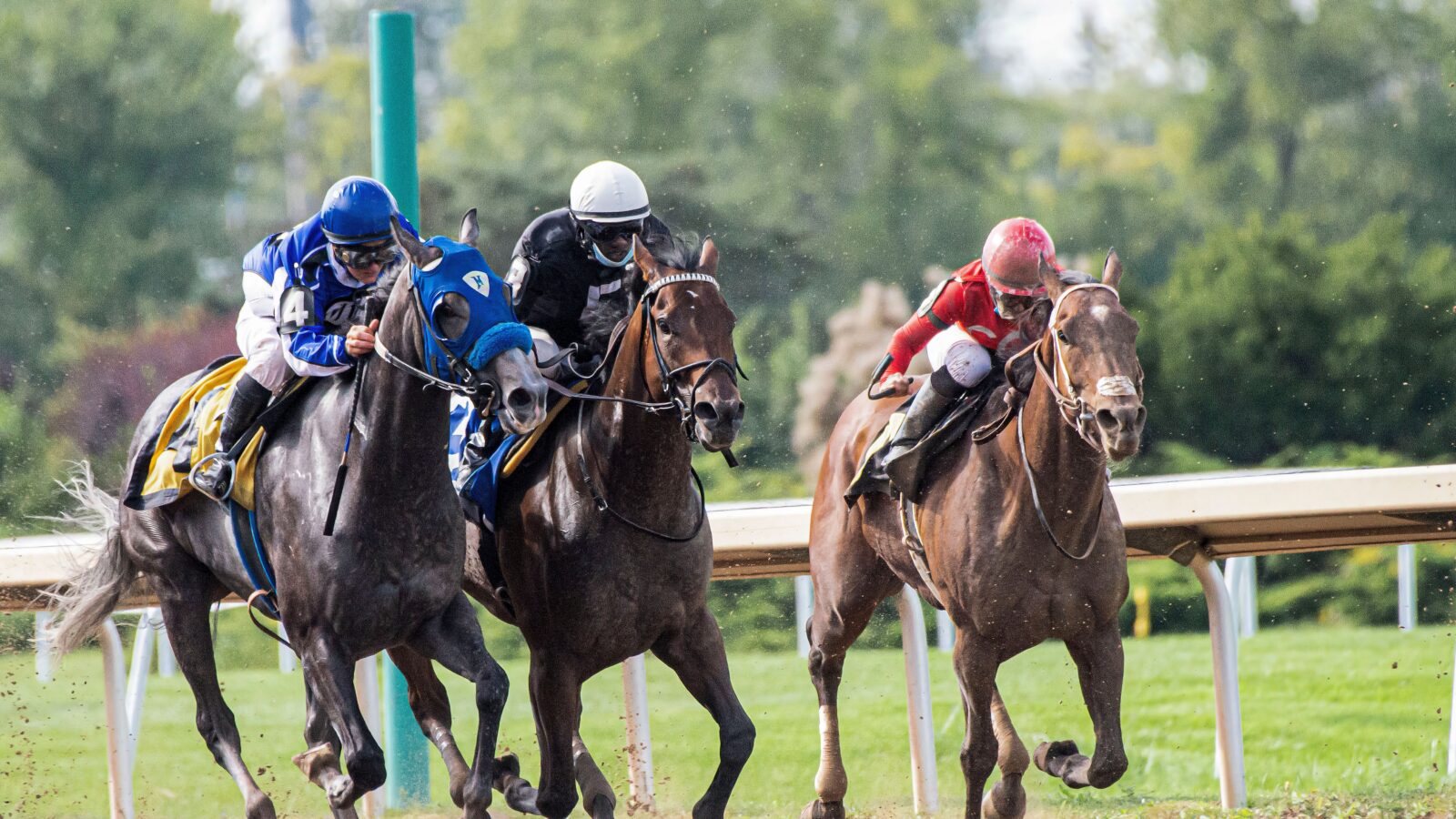
When Golden Tempo caught Renegade to win the 2026 Kentucky Derby at 23/1, a $2 exacta on the pair paid $278.86. That ticket needed both horses, and it also needed them in the right order. An exacta box takes the order out of the call. However, it costs more, and it pays less for every dollar you spend. That’s the trade. Below we cover how both bets work, what an exacta box costs at every size, and when we would rather key a horse instead.
What Is an Exacta Bet?
An exacta asks you to name the first two finishers in exact order. So if you bet 5 over 2, the 5 has to win and the 2 has to run second. Any other result loses, even 2 over 5.
Because both legs have to land, the exacta usually pays far more than a win bet on the same horse. For example, Golden Tempo paid $48.24 to win on a $2 ticket in the Derby. By contrast, the exacta with Renegade underneath paid almost six times that.
Most tracks post exacta prices per $2 on the results page, but most also let you play a smaller base amount. So a $1 exacta returns half the posted $2 price. Minimums vary from track to track, so check the program or the bet slip before you build a ticket. Also, if any of these terms are new, our horse racing terms glossary covers them.
How an Exacta Box Works
An exacta box covers every order of the horses you pick. For example, box the 5 and the 2, and you hold two tickets in one: 5 over 2, as well as 2 over 5. Either order cashes, so all you need is for your two horses to fill the top two spots.
Of course, that cover has a price. Each order counts as a separate combination, so the track charges your base amount for each one. As a result, a $1 exacta box on two horses costs $2, and only one of those two combinations can ever win.
When you add a third horse, the count jumps to six. Each horse can win with either of the other two in second, so the combinations multiply fast. In short, take the number of horses and multiply it by that number minus one.
Exacta Box Cost: Combinations and Prices
The table below shows what an exacta box costs from two horses up to six at a $1 base. The last column is the number we check before every box. It shows the posted $2 exacta price you need before the $1 version makes a profit.
| Horses Boxed | Combinations | $1 Box Cost | $2 Payout Needed to Profit on the $1 Box |
|---|---|---|---|
| Two horses | 2 | $2 | Over $4 |
| Three horses | 6 | $6 | Over $12 |
| Four horses | 12 | $12 | Over $24 |
| Five horses | 20 | $20 | Over $40 |
| Six horses | 30 | $30 | Over $60 |
A $1 ticket returns half the posted $2 exacta price, so the $1 box only shows a profit when the $2 price is more than double the box cost. At a $2 base, every box costs twice as much.
That last column matters. A lot. A four-horse $1 box costs $12, so the winning exacta has to pay more than $24 for $2 before you see any profit. Two short-priced favorites running one-two can easily come in under that bar. In that case, a correct ticket still loses money.
For this reason, we keep most of our boxes to two or three horses. Once you go to five or six, the ticket stops being an opinion about the race. Instead, it turns into a bet that the race falls apart.
How an Exacta Box Pays Out
Exacta payouts come from a pari-mutuel pool rather than a fixed price. In fact, Connecticut’s own exacta rules spell out the math. The track takes its cut first, then divides the net pool by the money bet on the winning combination. So the price depends on how many other bettors held the same two horses in the same order.
Your box, though, only ever cashes one combination. Take the 2026 Derby again, with the official payouts as reported by NBC Sports. First, a $2 straight exacta on Golden Tempo over Renegade cost $2 and returned $278.86. Meanwhile, a $1 exacta box on the same pair also cost $2, but it returned $139.43. That happened because half of the money sat on Renegade over Golden Tempo, and that half lost.
Both tickets got the two horses right. Only the straight ticket got the order right too, and it doubled the return as a result.
Scratches, on the other hand, work in your favor. If a horse in your exacta box comes out of the race, the track refunds every combination that includes it. Meanwhile, the rest of your ticket stays live.
Exacta Keys, Wheels and Part Wheels
A key sits between a straight exacta and a full box. You lock one horse into a spot, usually first, then cover several horses behind it. So if you key the 5 over the 2, 7 and 9, you hold three combinations for $3 at a $1 base.
A wheel then takes that idea to the whole field. The 5 over every other runner in a ten-horse race adds up to nine combinations. Part wheels sit in the middle, with two horses on top and a short list underneath.
| Ticket Type | Example | Combinations and $1 Cost |
|---|---|---|
| Straight exacta | 5 over 2 | 1 combination, $1 |
| Single key on top | 5 over 2 and 7 | 2 combinations, $2 |
| Wider key | 5 over 2, 7 and 9 | 3 combinations, $3 |
| Key both ways | 5 with 2, 7 and 9, in either spot | 6 combinations, $6 |
| Part wheel | 5 and 2 over 7, 9 and 11 | 6 combinations, $6 |
| Full wheel | 5 over every other horse in a ten-horse field | 9 combinations, $9 |
Horse numbers are examples only. Each combination costs your base amount, but only one combination can win.
Keys suit the way most of us actually handicap, because we usually have one horse we like a lot and three we can’t separate for second. A key over three costs half as much as a three-horse exacta box, and it keeps all the money on the horse we trust to win.
When to Box and When to Play It Straight
We box an exacta when two horses look evenly matched and both sit at fair prices. After all, if you can’t split them on form, the box pays you for skipping the guess on order.
On the other hand, we play it straight or key it when one horse stands out. Boxing a strong favorite with a 10/1 shot doubles the cost, since half of that money then rides on the long shot beating the favorite, which is the result you trust least.
Price matters too. Box two short favorites at 6/5 and 9/5, and a one-two finish is exactly what the pool expects. As a result, the payout can land close to the $2 you spent. For this reason, a single straight exacta in the order you prefer makes more sense.
Once you’re comfortable with exactas, compare them with the trifecta in our exacta vs trifecta guide. The trifecta adds a third finisher, so the cost of a box climbs much faster.
Build Your Exacta Box on MyWinners
So next time two horses in a race look impossible to separate, run the numbers first. It takes ten seconds. Count your combinations, check the cost against the likely price, and then put your exacta box in before the gate opens. Also, if you want a sensible stake to start with, our $20 race day plan shows how to spread a small bankroll across a card.
Bet online at app.mywinners.com, on the MyWinners: Racing & Sports app on iOS or Android, or go here to find your nearest MyWinners or Winners venue in CT.