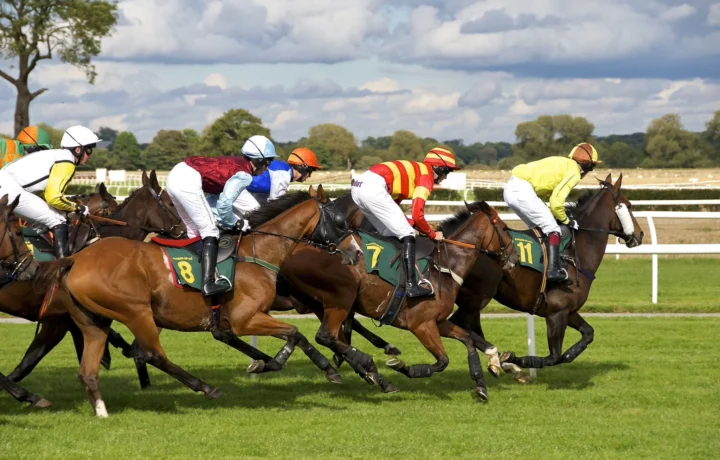
Horse racing has its own language, and if you’re new to the sport (or you’ve been betting for years without ever looking it up) some of it can feel like a foreign language. Furlongs, quinellas, exactas — these aren’t just jargon, they’re the building blocks of how races are measured and how bets actually pay out. We’re breaking down the essential terms here so you can walk up to any window, or open the MyWinners app, and know exactly what you’re betting on.
Table of Contents
What Is a Furlong in Horse Racing? How Long Is a Furlong? How Many Furlongs Are in a Mile? What Is a Quinella Bet? What Is an Exacta Bet? Quinella vs Exacta: What’s the Difference? More Essential Horse Racing Terms to Know Betting These Terms at MyWinnersWhat Is a Furlong in Horse Racing?
A furlong is a unit of distance used almost exclusively in horse racing today. One furlong equals one-eighth of a mile. The term dates back to English agriculture, originally describing the length of a furrow a team of oxen could plow before resting — “furrow-long” eventually became “furlong.” Racing kept the unit long after farming moved on, and it’s still how every race distance in North America and the UK is measured.
How Long is a Furlong?
A furlong measures:
-
220 yards
-
660 feet
-
201.168 meters
-
1/8 of a mile
For context, that’s roughly two average city blocks. It’s short enough that a single furlong difference between two races can mean a completely different type of contest — sprinters live in the 5-6 furlong range, while classic distance horses stretch out to a mile and beyond.
How Many Furlongs Are in a Mile?
Eight furlongs make up one mile. Once you know that conversion, every race distance on a program starts to make sense at a glance:
| Distance | Furlongs | Example Race Type |
|---|---|---|
| 5 furlongs | 5f | Sprint race |
| 6 furlongs | 6f | Sprint race |
| 7 furlongs | 7f | Sprint/route in between |
| 1 mile | 8f | Mile race |
| 1 1/16 miles | 8.5f | Route race |
| 1 1/8 miles | 9f | Route race |
| 1 1/4 miles | 10f | Kentucky Derby distance |
| 1 1/2 miles | 12f | Belmont Stakes distance |
What Is a Quinella Bet?
A quinella is a bet where you pick two horses to finish first and second, in either order. If your two horses cross the wire in the top two spots — no matter which one wins and which one places — the quinella cashes. It’s a more forgiving bet than an exacta because you don’t need to call the exact finishing order, which is why quinella payouts tend to run lower than exacta payouts on the same two horses.
What Is an Exacta Bet?
An exacta is a bet where you pick two horses to finish first and second in the exact order. Get the 1-2 finish right, but pick the wrong horse for the wrong spot, and the ticket loses. Because you’re calling the precise order, exactas are harder to hit than quinellas — but they pay out more when they land, which is why sharp bettors often prefer them for value on races where they have a strong opinion on which horse wins versus which one just places.
Quinella vs Exacta: What’s the Difference?
| Feature | Quinella | Exacta |
|---|---|---|
| Finishing order required | Either order | Exact order |
| Difficulty | Easier to hit | Harder to hit |
| Typical payout | Lower | Higher |
| Best used when | You like two horses but aren’t sure which wins | You have a strong opinion on the winner |
More Essential Horse Racing Terms to Know
A few more terms worth knowing before you dive into a card:
-
Post Position — the starting gate slot a horse is assigned for the race
-
Morning Line — the track handicapper’s projected odds before wagering opens
-
Maiden Race — a race for horses that have never won a race
-
Claiming Race — a race where every horse entered can be bought (“claimed”) for a set price
-
Allowance Race — a step above claiming, for horses not yet good enough for stakes company
-
Stakes Race — the top level of competition, often with the biggest purses
-
Scratch — when a horse is withdrawn from a race before it starts
-
Photo Finish — when the margin at the wire is too close to call with the naked eye and needs a photo to determine the winner
Betting These Terms at MyWinners
Now that you know your furlongs from your fractions, and your quinellas from your exactas, you’re ready to put it to use. Every race card on the MyWinners app shows distance in furlongs and gives you quinella, exacta, and straight win/place/show options right at your fingertips.
Bet online at app.mywinners.com, on the MyWinners: Racing & Sports app on iOS or Android, or go here to find your nearest MyWinners or Winners venue in CT.