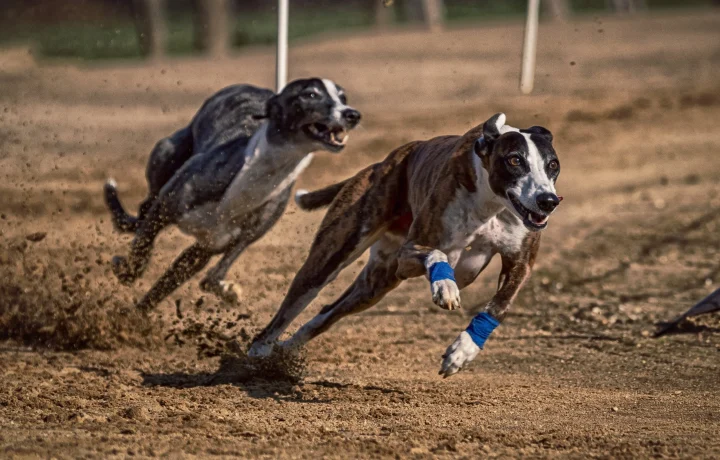
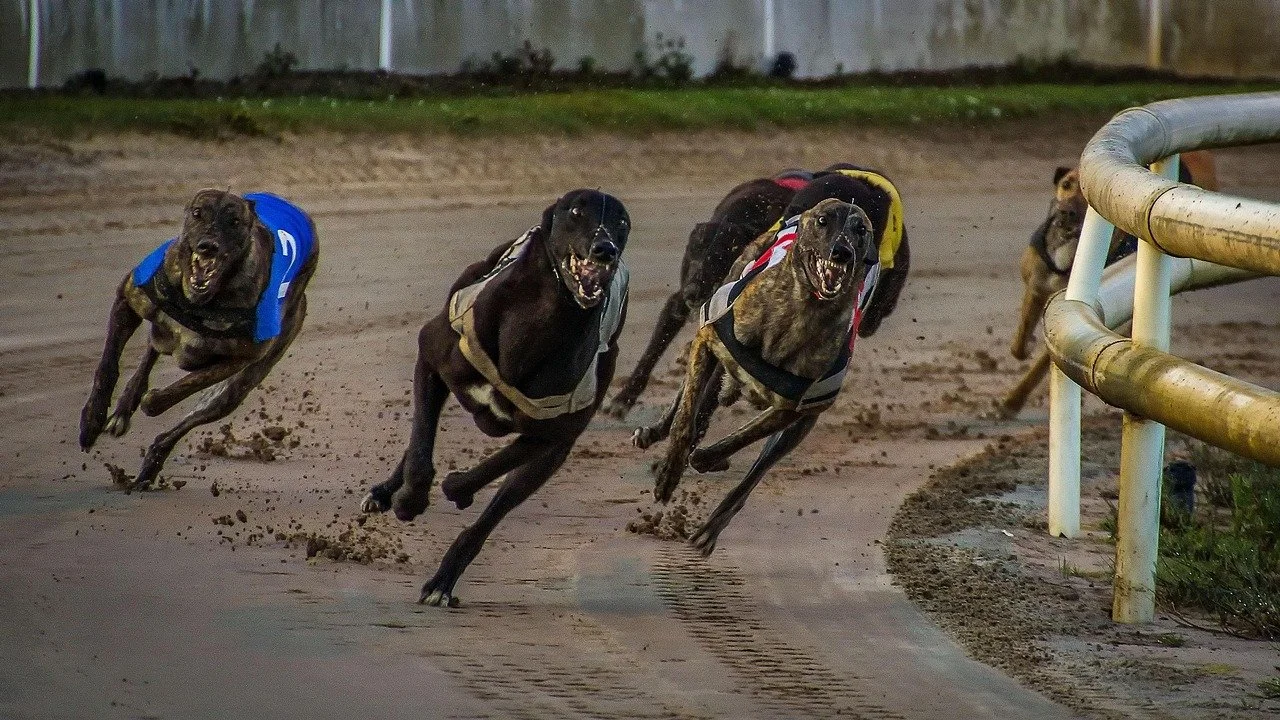
Most bettors know horse racing, and plenty have tried jai alai. Far fewer have put a bet on a greyhound race, and that leaves a gap in a lot of betting days. Greyhound racing runs on simulcast at MyWinners from tracks in West Virginia, the UK, and across Australia, with races going off every few minutes on a busy card.
This guide explains the sport from the ground up. We cover how a race works, where the racing comes from, which bets you can make and what to look for on a form guide, so you can place your first greyhound bet with confidence.
Greyhound Racing at a Glance
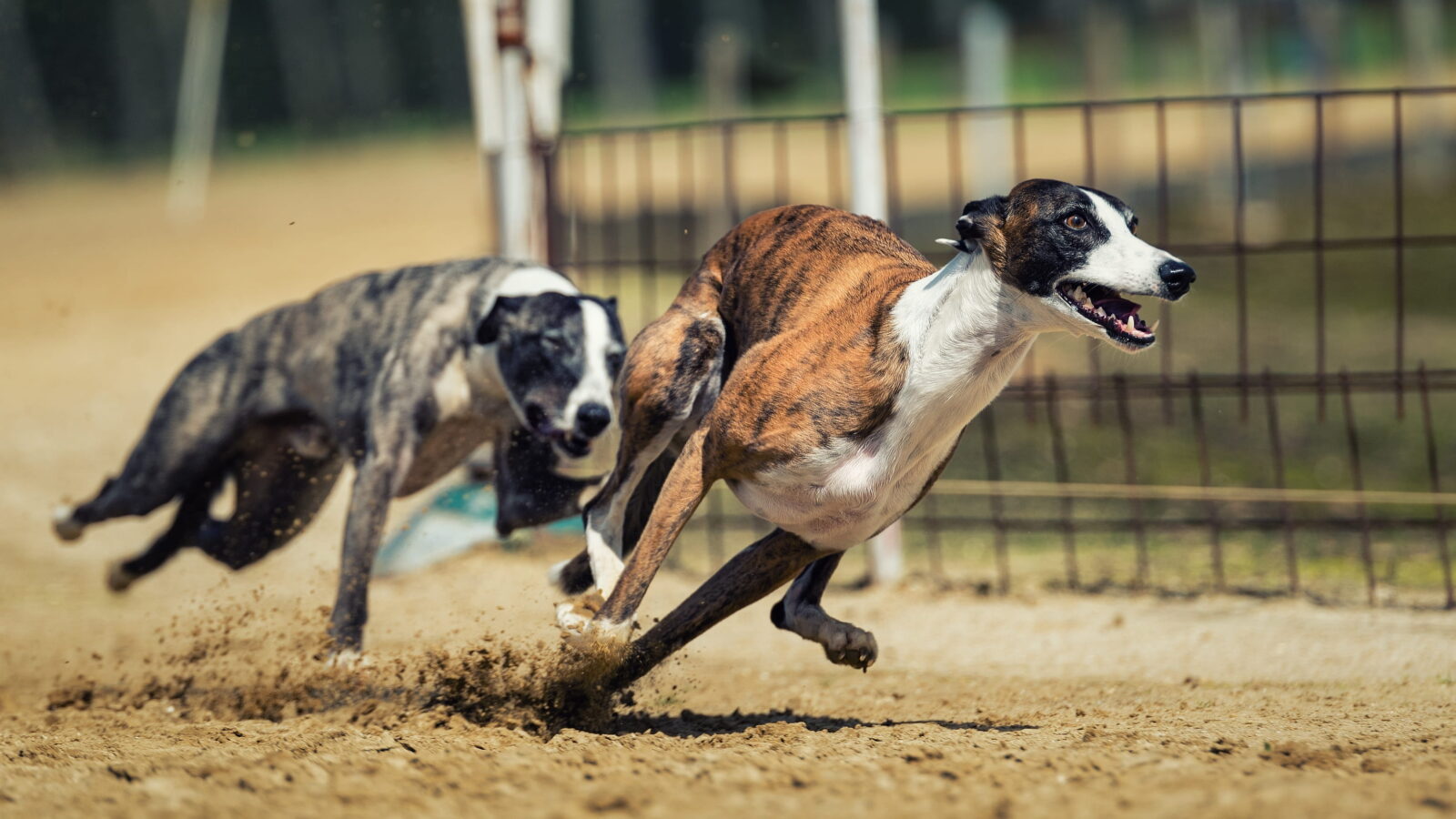
Greyhound racing sends a field of dogs, usually eight, after a mechanical lure around an oval track. A sprint lasts around 30 seconds, and the dogs reach speeds of up to about 45 mph. Betting works the same way it does on horse racing, with pool bets such as win, exacta and trifecta.
MyWinners offers greyhound racing from three countries. In the US, the sport now runs live only in West Virginia. In the UK, 16 tracks licensed by the Greyhound Board of Great Britain race six dog fields, with cards most days of the week. In Australia, it is a major industry with meetings almost every day of the year.
| US Greyhound Racing | UK Greyhound Racing | Australian Greyhound Racing | |
|---|---|---|---|
| Where it runs | Two tracks, both in West Virginia: Wheeling Island and Mardi Gras | 16 tracks licensed by the Greyhound Board of Great Britain | Tracks in every mainland state plus Tasmania |
| Volume | Two tracks racing several days a week | Cards most days of the week | Around 4,700 meetings and 52,500 races a year across Australia and New Zealand (2022/23) |
| Field size | Usually eight dogs | Six traps per race | Eight boxes per race |
| Grading | Classes by ability, with separate maiden races | Letter and number grades, such as A1, plus open races | Maidens, numbered grades and Free For All races |
| When to bet (ET) | Daytime cards, with Wheeling Island starting at 1pm | Mostly US morning through afternoon | Mostly US evening through early morning |
| How to bet | Online, on the app or at MyWinners and Winners venues in CT | Online, on the app or at MyWinners and Winners venues in CT | Online, on the app or at MyWinners and Winners venues in CT |
Where Modern Greyhound Racing Came From
Dogs have raced for centuries, but the modern sport started in the US. Engineer Owen Patrick Smith tested his mechanical lure in Emeryville, California, in 1919, and opened a track there soon after. That invention turned coursing in open fields into racing on a track, and it made the sport easy to bet.
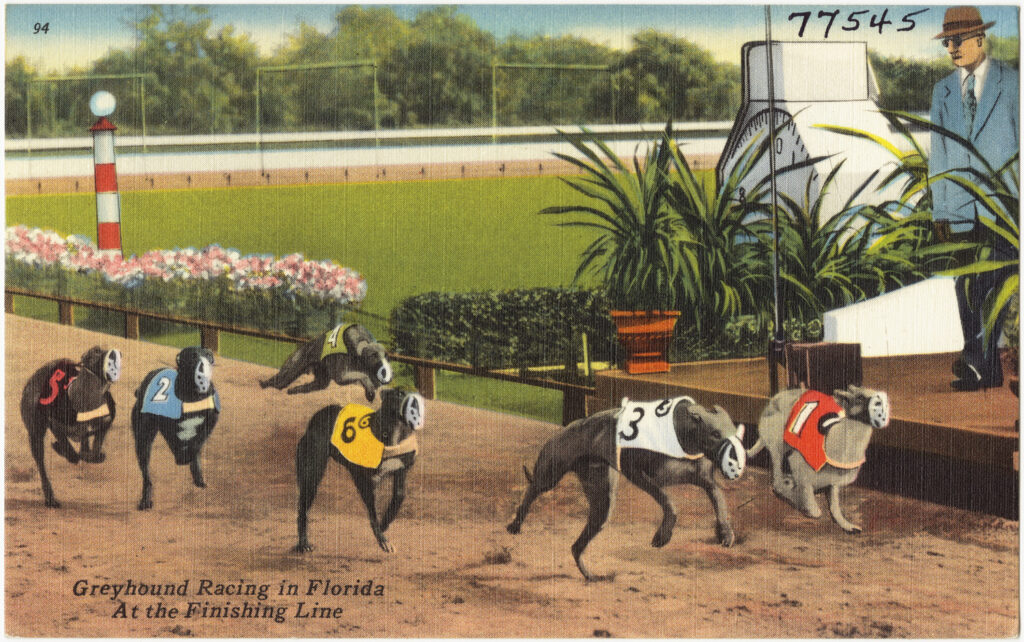
The idea crossed the Pacific within a decade. Australia’s first greyhound meeting took place on May 28, 1927, at Epping Racecourse in Sydney, later renamed Harold Park. Crowds there soon averaged around 18,000 a meeting, and the sport has run in Australia ever since.
How a Greyhound Race Works
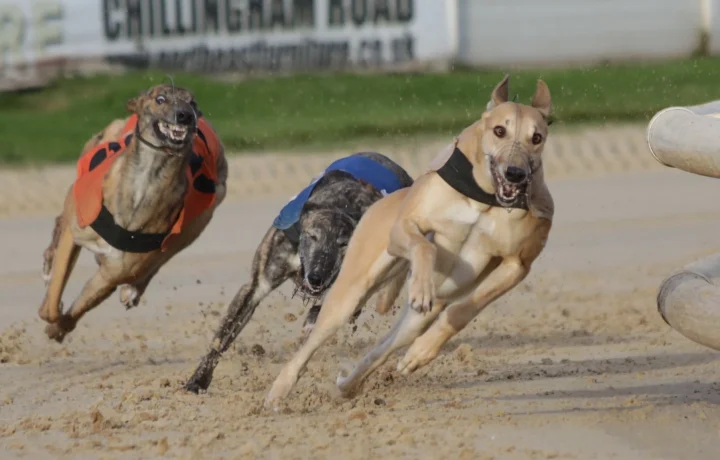
Each dog starts from a numbered box, which US tracks also call a post. Australian fields have eight boxes, with box 1 on the inside rail and box 8 on the outside. The lure travels around the inside or outside of the track just ahead of the field. When the boxes open, the dogs chase it all the way to the finish line, and a photo decides any close finish.
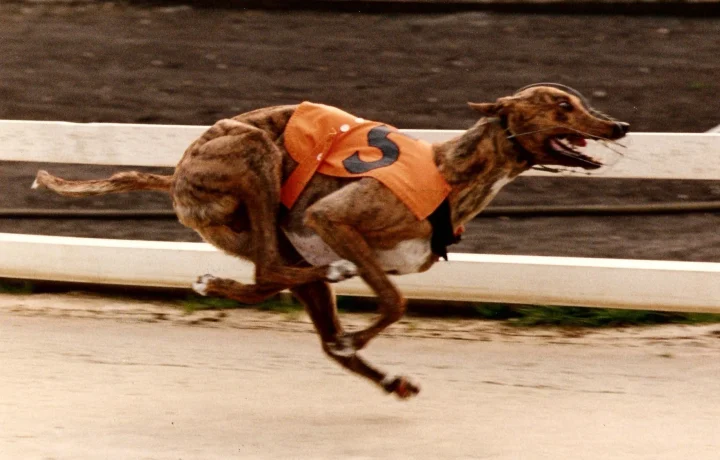
Nobody steers a greyhound. There are no jockeys and no tactical rides, so a race comes down to three things: how fast a dog leaves the boxes, how cleanly it gets around the first turn, and how strongly it finishes. The first turn is where most races are won and lost, because eight dogs arrive there at full speed and the ones that get bumped rarely make up the ground.
Tracks grade their dogs by ability so that each race stays competitive. US tracks sort dogs into classes by ability, with maidens that have yet to win racing separately. Australian racing runs from maiden races up through numbered grades to Free For All races, which bring together the best dogs regardless of grade. A dog that wins moves up, and a dog that struggles drops down, so form and grade work together.
Where the Racing Comes From: West Virginia, the UK and Australia
Live greyhound racing has shrunk a long way in the US. Florida’s voters banned it in 2018, with the ban taking effect at the end of 2020, and Iowa and Arkansas have both closed their last tracks. That leaves two tracks, both in West Virginia and both owned by Delaware North: Wheeling Island in Wheeling, which has run greyhounds since 1976, and Mardi Gras Casino and Resort in Nitro, near Cross Lanes, which opened in 1985. Connecticut is one of the states where simulcast betting on greyhound racing remains legal.
The UK is where the six dog race is standard. The Greyhound Board of Great Britain licenses 16 tracks, and much of the daytime racing is staged for betting shops through the Bookmakers Afternoon Greyhound Service, known as BAGS. The sport’s biggest race, the English Greyhound Derby, runs at Towcester, with £175,000 to the winner in 2026. The map is shrinking, though. Scotland’s last track closed in 2025, and Wales passed a law in April 2026 that will end racing at its only track, the Valley in Ystrad Mynach.
UK cards line up neatly with the US day. Afternoon meetings in Britain run during the US morning, and evening meetings run into the early afternoon, Eastern time.
Australia supplies the volume. Across Australia and New Zealand, the sport staged around 4,700 meetings and 52,500 races in the 2022/23 season, according to the industry’s Size and Scope study. New South Wales and Victoria are the two biggest states, with Queensland, South Australia, Western Australia and Tasmania adding cards of their own.
Because of the time difference, Australian meetings mostly run from the US evening through the early morning, Eastern time. That makes Aussie greyhounds one of the few live betting options available while US tracks are dark. Check the MyWinners app for each day’s cards and post times.
Why Bet Greyhound Racing
Frequency is the big draw. With several Australian meetings running at once, a new race often goes off every few minutes, so you never wait long for the next bet. Each race is over in around 30 seconds, and you know the result almost straight away.
Greyhound form is also simpler than horse racing form. There’s no jockey to factor in, no weight to adjust for and fewer equipment changes to track. You weigh up speed, box draw and recent form, and that’s a big part of the job done.
Fields of eight also suit exotic bets. A trifecta or superfecta involves fewer possible combinations than it does in a 14 runner horse race, which makes boxing a handful of dogs more affordable.
Greyhound Bet Types Explained
Greyhound betting uses the same pool system as horse racing. Every bet goes into a pool, the track takes its share, and the rest is paid out to the winning tickets. The odds you see before the race move as money comes in, and the final dividend settles your bet.
| Bet | How It Wins |
|---|---|
| Win | Your dog finishes first |
| Place | Your dog finishes first or second |
| Show | Your dog finishes first, second or third |
| Quinella | You pick the first two dogs in either order |
| Exacta | You pick the first two dogs in exact order |
| Trifecta | You pick the first three dogs in exact order |
| Superfecta | You pick the first four dogs in exact order |
| Box | Covers every finishing order among the dogs you pick, at one bet per combination |
Box bets are worth understanding early. A box covers every finishing order among the dogs you pick. A $1 exacta box on two dogs costs $2 and wins if those two dogs finish first and second in either order. Both dogs still have to fill the top two spots. A $1 trifecta box on three dogs covers six combinations and costs $6.
Bet types and minimums can vary by track, so check which pools the app shows for each race before you build a ticket.
How to Read a Greyhound Form Guide
A form guide lists each dog’s recent races. For every run you’ll see the box it started from, where it finished, the distance, the winning margin and the race time. Most guides also show a split time for the first section of the race, which tells you how quickly the dog leaves the boxes.
Start with early speed. A dog with the fastest first split in the field has a strong chance of leading into the first turn, and leaders avoid the trouble behind them. Then look at the box. A dog that likes to hug the rail does best from an inside box, while a wide runner can get caught in traffic if it draws inside dogs that are slower away.
Finally, compare run times over the same distance at the same track. Times at different tracks don’t line up, but times over the same course on similar nights give you a clean way to rank the field.
Bet Greyhound Racing With MyWinners
Greyhound racing gives us short, sharp races, fields of eight and a steady flow of betting through the day and night, from West Virginia in the afternoon to Australia overnight. Pull up a card, study the boxes and the early speed, and see how quickly the sport grows on you.
Bet online at app.mywinners.com, on the MyWinners: Racing & Sports app on iOS or Android, or go here to find your nearest MyWinners or Winners venue in CT.
Feature image by Rainer Hungershausen, licensed under CC by 2.0.
Find Out More:
Why Should I Bet on Greyhound Racing?